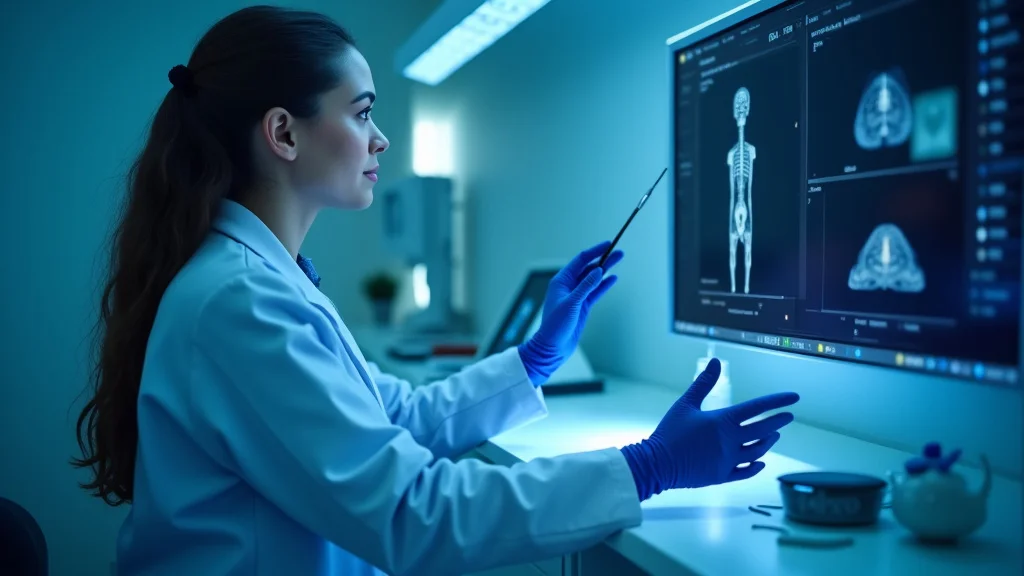
Imagine a doctor poring over countless medical images, searching for a subtle anomaly that might indicate a serious illness. Now, picture that same doctor, but with a powerful assistant: AI. This technology can analyze medical data faster and with greater accuracy than humans, helping physicians make better decisions and provide earlier diagnoses. You’re about to explore the ways AI is transforming healthcare, giving you a peek into the future of medicine. You’ll gain a solid grasp of how AI assists in diagnosing a wide range of conditions, and how it’s poised to become an indispensable tool for medical professionals everywhere. This will improve your ability to quickly understand how the content works.
Key Takeaways
- AI helps doctors spot diseases earlier and more accurately by analyzing medical images and patient data.
- Artificial intelligence assists in improving accuracy.
- AI tools can personalize treatment plans based on a patient’s individual needs.
- AI is changing healthcare by making it more efficient, accessible, and precise for patients.
- AI applications offer doctors tools to accelerate the diagnosis time.
- Doctors use AI to analyze medical data to enhance diagnostic precision.
How Artificial Intelligence Is Changing Healthcare
Artificial intelligence is no longer a futuristic concept; it’s actively reshaping the healthcare field. From assisting in the interpretation of complex medical images to predicting patient outcomes, AI is offering unprecedented capabilities. This is particularly true in the area of diagnosis, where early and accurate detection can be the difference between successful treatment and more serious consequences. The technology’s ability to process vast amounts of data allows doctors to discover patterns and insights that might be missed by the human eye. This leads to more informed decisions, improved patient outcomes, and a healthcare system that is increasingly data-driven and efficient.
The Basics of Artificial Intelligence in Medicine
At its core, artificial intelligence in medicine refers to computer systems that can perform tasks that usually require human intelligence. This includes learning from data, recognizing patterns, and making decisions. These systems utilize algorithms and machine learning techniques, allowing them to analyze and interpret medical information with remarkable speed and precision. The types of AI used in medicine range from simple rule-based systems to complex neural networks capable of mimicking the human brain’s processing abilities. Machine learning, a subset of AI, is especially important, as it enables the systems to improve their performance over time through experience, leading to more accurate diagnoses and treatment recommendations.
- Machine Learning Algorithms: These algorithms are trained on vast datasets of medical information, allowing them to identify patterns and make predictions.
- Deep Learning: A more advanced form of machine learning that uses neural networks with multiple layers, allowing it to analyze data at a deeper level.
- Natural Language Processing (NLP): Enables computers to understand and process human language, which is used to analyze patient records and clinical notes.
Machine learning algorithms are the workhorses of AI in medicine. They learn from extensive datasets of medical records, images, and other patient information. This training enables them to recognize subtle patterns and anomalies that might be missed by human clinicians. Algorithms include support vector machines, decision trees, and, most commonly, neural networks, each offering unique strengths for different diagnostic challenges. The model refines its predictions, enhancing accuracy as it processes more data. These algorithms drive improvements in diagnostic accuracy, treatment planning, and prediction of patient outcomes. The result is a more efficient and personalized approach to healthcare.
Deep learning is a subset of machine learning that uses artificial neural networks with multiple layers (deep neural networks) to analyze data. These networks mimic the structure and function of the human brain, allowing for complex pattern recognition and decision-making. In medical applications, deep learning is used to analyze medical images like X-rays, MRIs, and CT scans. It is used to detect subtle features indicative of disease, such as tumors or bone fractures. Deep learning models can identify these features much faster and with greater accuracy. This enables quicker diagnosis and earlier interventions.
Natural Language Processing (NLP) is a branch of AI that focuses on enabling computers to understand, interpret, and generate human language. In healthcare, NLP is used to analyze unstructured data such as clinical notes, medical reports, and research papers. It can identify key information, such as symptoms, diagnoses, and treatment plans. This allows doctors to quickly retrieve relevant information and gain insights into a patient’s medical history. It can also be used to improve the accuracy of medical coding and billing, as well as to develop new medical knowledge from existing literature.
AI’s Role in Medical Imaging and Diagnosis
Medical imaging has become a cornerstone of modern diagnosis, and AI is revolutionizing how these images are interpreted. By analyzing X-rays, MRIs, CT scans, and other imaging modalities, AI can spot anomalies and assist in diagnoses with remarkable precision. This improves diagnostic speed and accuracy while also helping to reduce errors. The ability to identify subtle changes in images enables earlier detection of diseases, which often results in improved treatment outcomes. This transformative technology is helping to create a new standard of care where diagnostic precision is improved by AI.
Image Analysis Techniques
AI utilizes sophisticated techniques to analyze medical images, providing doctors with an edge in diagnosis. The process begins with the preprocessing of images to improve quality and reduce noise. This is followed by image segmentation, where the AI isolates specific organs or regions of interest. Feature extraction then identifies key characteristics within the images that may indicate disease. Finally, these features are analyzed using machine learning algorithms to make diagnostic predictions. This is useful for identifying things like tumors or bone fractures, helping doctors to arrive at diagnoses quicker and with greater confidence.
- Detection of Subtle Anomalies: AI can identify minute changes in images that might be missed by the human eye.
- Assistance in Diagnosing Complex Conditions: AI aids in diagnosing intricate diseases like lung cancer, cardiovascular problems, and neurological disorders.
- Reducing Radiologist Workload: Automating parts of the image analysis process frees up radiologists’ time for more complex cases.
AI excels at spotting subtle anomalies in medical images, which is very important in early disease detection. It can detect subtle variations in tissues, the shape of organs, or the density of bone structures that might escape the notice of a human radiologist. This ability is particularly critical in the early stages of diseases such as cancer, where identifying the disease at its inception dramatically improves treatment success rates. By providing an added layer of scrutiny, AI ensures that no detail is overlooked, contributing to a more precise and timely diagnosis.
AI plays a critical role in assisting doctors with the diagnosis of intricate health conditions, like lung cancer, heart problems, and neurological disorders. For lung cancer, AI can analyze CT scans to identify small nodules. It helps in assessing cardiovascular conditions by detecting subtle changes in heart structures or blood flow patterns. In neurology, it aids in the analysis of brain scans to recognize early indicators of diseases. AI helps doctors evaluate and interpret large amounts of complex data. This is achieved through analysis and by offering deeper insights, which in turn leads to faster and more accurate diagnoses. This assistance results in improved patient outcomes and more effective care.
AI is designed to decrease the workload on radiologists by automating sections of the image analysis process. AI can rapidly assess medical images, providing initial screening and flagging potential problems that merit further scrutiny. This helps radiologists focus their skills on more challenging situations. The ability to filter large amounts of imaging data boosts efficiency and reduces turnaround times for diagnostic reports. This increases the overall productivity of the radiology department and improves the level of care provided to patients.
How Doctors Use AI to Help Diagnose Patients in Specific Specialties
AI’s versatility makes it a valuable tool across multiple medical specialties, from ophthalmology to cardiology. In each area, AI offers unique benefits, providing new ways to diagnose and treat diseases. By tailoring AI solutions to specific needs, doctors can improve diagnostic accuracy, speed up treatment, and enhance patient outcomes across various areas of healthcare.
Ophthalmology: Analyzing Eye Scans
In ophthalmology, AI is used to analyze optical coherence tomography (OCT) scans, which visualize the retina. AI can detect diseases like diabetic retinopathy, glaucoma, and age-related macular degeneration (AMD) at an early stage. This is useful because many eye conditions cause no symptoms in the beginning. The use of AI enables doctors to begin treatment earlier, improving patient outcomes and preventing vision loss.
- Diabetic Retinopathy Detection: AI helps spot signs of diabetic retinopathy, a leading cause of vision loss in people with diabetes.
- Glaucoma Detection: AI aids in detecting glaucoma, a condition that damages the optic nerve and can lead to blindness.
- Age-Related Macular Degeneration (AMD) Assessment: AI assists in assessing AMD, which affects central vision.
AI helps doctors recognize the early signs of diabetic retinopathy, which is a significant cause of vision loss for people with diabetes. AI analyzes retinal images to identify subtle changes such as microaneurysms, hemorrhages, and retinal edema. This quick analysis allows doctors to identify patients needing more treatment. With AI, early detection leads to better treatments, helping to preserve the patient’s eyesight.
AI helps in the detection of glaucoma. AI analyzes optic nerve images to find signs of nerve damage, which is a symptom of glaucoma. By detecting these subtle changes, AI helps doctors diagnose glaucoma earlier. Early diagnosis helps people get treatment and reduce the risk of vision loss. This means people can keep their eyesight for a long time.
AI aids in assessing age-related macular degeneration (AMD). AMD affects the central vision. AI helps analyze retinal images to find early signs of AMD, such as drusen. AI helps doctors monitor the progression of the disease. This is helpful for developing personalized treatments. Using AI for assessment means people can receive treatment to help maintain their vision.
Cardiology: Analyzing Heart Scans and Data
Cardiology benefits from AI in multiple ways, from interpreting echocardiograms to predicting heart attack risk. AI algorithms analyze images and patient data to identify heart diseases, assess risk factors, and personalize treatment plans. This is useful for improving patient outcomes. The use of AI in cardiology is improving diagnostic precision and offering innovative approaches to heart health care.
- Detecting Cardiac Abnormalities: AI can identify abnormalities in echocardiograms and other heart scans.
- Predicting Heart Attack Risk: AI models can analyze patient data to predict the risk of heart attacks.
- Personalizing Treatment Plans: AI assists in creating treatment plans customized to a patient’s needs.
AI assists in identifying abnormalities in echocardiograms and other heart scans. AI analyzes images to recognize signs of conditions like enlarged heart chambers, valve problems, and unusual wall motion. This ability allows doctors to quickly diagnose heart conditions. Early detection is helpful for doctors to begin treatment and improve patient outcomes. AI is improving the precision and speed of diagnosis.
AI models use patient data to predict the risk of heart attacks. These models incorporate factors like age, medical history, lifestyle habits, and lab results. This enables doctors to assess a patient’s risk and identify those most likely to experience a heart attack. This information allows for preventive measures. These can range from lifestyle modifications to medication, leading to a better outcome.
AI helps create personalized treatment plans based on a patient’s individual needs. By analyzing their medical history, test results, and response to earlier treatments, AI offers insights into which treatments are most likely to succeed. This means doctors can select the most effective medications and interventions for each patient. This approach can improve outcomes, reduce side effects, and optimize care.
Oncology: Assisting in Cancer Diagnosis
AI has the potential to transform cancer diagnosis by analyzing medical images and genetic data to detect and characterize tumors. It assists doctors in making early diagnoses, determining the stage of the disease, and personalizing treatment plans. This will improve survival rates and reduce the burden of cancer. The ability of AI to interpret vast amounts of data provides a new perspective on cancer care.
- Analyzing Medical Images: AI can analyze images to detect cancerous tumors.
- Genomic Data Analysis: AI analyzes genomic data to identify genetic markers.
- Predicting Treatment Response: AI predicts how patients will respond to treatment.
AI is capable of analyzing medical images, such as X-rays, CT scans, and MRIs, to detect cancerous tumors. AI algorithms can identify subtle changes in the images that might indicate the presence of a tumor. Early detection is essential. It leads to improved survival rates. AI aids doctors in making accurate and timely diagnoses.
AI analyzes genomic data to identify genetic markers linked to cancer. This can assist in classifying cancer types and predicting how a patient will respond to treatment. This information is important for guiding treatment decisions and can help doctors select the most effective therapies for their patients. Genomic analysis allows for a more personalized approach to cancer treatment, improving the likelihood of a positive outcome.
AI predicts how patients will respond to different cancer treatments. By assessing patient data, including medical history, test results, and genetic information, AI can forecast the chances of a treatment’s success. This information assists doctors in personalizing treatment plans and reduces the risk of ineffective therapies. Predicting treatment response with AI makes cancer care more efficient and personalized, improving the chances of successful outcomes.
How AI Improves Efficiency in Medical Diagnoses
AI provides many ways to improve efficiency in medical diagnoses. These include automating time-consuming tasks, improving workflow, and giving doctors more time. By integrating AI into diagnostic processes, healthcare providers can enhance the speed, accuracy, and efficiency of their operations. The impact of AI on efficiency is transforming the delivery of healthcare services.
Automation of Tasks
AI automates many of the repetitive and time-intensive tasks in medical diagnosis. This includes tasks such as image analysis, report generation, and data entry. This allows healthcare professionals to focus on higher-level decision-making and patient interaction, reducing burnout and increasing job satisfaction. The ability of AI to automate these tasks is helping to make medical diagnoses quicker and more efficient.
- Image Analysis: AI automates the analysis of medical images, saving doctors valuable time.
- Report Generation: AI can automatically generate preliminary reports based on medical images and patient data.
- Data Entry: AI streamlines the process of data entry, reducing human errors.
AI automates image analysis. This saves doctors valuable time and lets them diagnose patients quickly. AI algorithms rapidly analyze medical images, such as X-rays and MRIs, to identify abnormalities. The automation helps reduce the time needed to review images. It also helps doctors focus on important cases.
AI can generate preliminary reports based on medical images and patient data. These preliminary reports provide an early overview of the findings, helping doctors get a quick view of a patient’s condition. These reports improve efficiency and allow doctors to make quick decisions, leading to faster diagnoses and better patient care.
AI streamlines data entry, which helps reduce human errors. AI can automatically extract information from medical records and other data sources. This automated entry reduces the need for manual input. This helps improve data accuracy and reduce the workload on healthcare professionals.
Streamlining Workflow
AI streamlines the workflow by connecting different parts of the diagnostic process. This includes integrating systems for image analysis, reporting, and patient data management. By streamlining workflow, healthcare providers can improve collaboration, reduce delays, and provide more efficient patient care.
- Improved Collaboration: AI improves collaboration between specialists by enabling quick sharing of information.
- Reduced Delays: AI helps reduce the time it takes to get results, allowing faster diagnoses.
- Efficient Data Management: AI systems improve the efficiency of managing patient data.
AI improves collaboration between specialists. By enabling the quick sharing of information, doctors and specialists can easily access patient data, medical images, and diagnostic reports. This promotes better teamwork and coordination, and it means that the patient gets a more complete and accurate diagnosis.
AI helps reduce delays in the diagnostic process. AI analyzes medical images and patient data quickly. This enables doctors to get their results faster, resulting in faster diagnoses. Rapid results mean patients can get treatment, and it improves patient satisfaction.
AI systems enhance the efficiency of managing patient data. AI helps organize and manage patient records, test results, and medical images. By using AI to do this, doctors can easily access information. AI improves the efficiency of diagnostic processes.
Enhancing Doctor’s Productivity
By automating tasks, streamlining workflow, and providing quick access to information, AI helps doctors be more productive. This gives doctors more time to focus on patient care, make better decisions, and improve the quality of healthcare. AI helps doctors have a positive impact on patient care.
- More Time for Patient Care: Automation of tasks allows doctors more time for patient interaction.
- Improved Decision-Making: AI provides doctors with data to improve their clinical decision-making.
- Reduced Burnout: AI reduces the workload, which lowers stress levels.
AI’s automation of tasks offers doctors more time for patient interaction. AI reduces the time spent on administrative and repetitive activities. This allows doctors to dedicate more attention to patients. More time allows for better patient care.
AI provides doctors with data to improve their clinical decision-making. It offers insights into a patient’s health and risk factors. Using this information, doctors can diagnose patients and select the most effective treatments. This leads to better patient outcomes.
AI helps lower stress levels by reducing the workload. AI’s automation of repetitive tasks and the streamlining of processes help reduce the demands on doctors. With less pressure, healthcare professionals feel less stress, have more energy, and provide better patient care.
Common Myths Debunked
Myth 1: AI Will Replace Doctors
Reality: AI is a tool to help doctors, not replace them. AI is useful for performing repetitive tasks, analyzing data, and finding patterns. But, it still needs human doctors to guide the AI, interpret the results, and make decisions. Doctors also provide the personal touch, empathy, and critical thinking skills that AI cannot replicate. AI increases efficiency and assists, but human medical expertise is still essential.
Myth 2: AI Diagnoses Are Always Correct
Reality: AI is not always perfect, and its diagnoses can sometimes be incorrect. AI models are trained on data, and the quality and completeness of that data affect its accuracy. Errors, biases, or unexpected circumstances can lead to mistakes. It’s important to see AI as a support tool, and doctors need to carefully review the AI’s conclusions and use their clinical judgment.
Myth 3: AI is Too Complex to Use
Reality: While the underlying technology may be complex, AI tools in healthcare are being designed to be user-friendly. Developers are creating interfaces that are easy for doctors to use without requiring advanced technical knowledge. Training and support are often provided. The goal is to make AI accessible and beneficial to doctors of all levels of experience.
Myth 4: AI Can’t Handle Unique or Unusual Cases
Reality: AI systems are constantly evolving and improving their ability to handle various types of cases. While AI may work best on common conditions where it has a lot of training data, advancements are being made to handle complex and rare medical cases. AI can access and analyze a lot of information, which helps doctors make better decisions for any case. AI continues to expand its abilities.
Myth 5: AI is Only for Large Hospitals
Reality: AI is becoming more accessible for all sizes of healthcare facilities. The cost of AI tools is coming down, and cloud-based solutions are becoming more prevalent. Small hospitals and clinics can benefit from AI applications. The aim is to make AI available to all doctors to improve healthcare.
Frequently Asked Questions
Question: How accurate is AI in diagnosing diseases?
Answer: The accuracy of AI in diagnosing diseases varies depending on the specific application and the quality of the data it is trained on. AI can be very accurate, sometimes exceeding human capabilities in specific areas, such as detecting subtle anomalies in medical images. However, it’s essential to remember that AI is a tool to support doctors, and its accuracy is not always 100%.
Question: What types of medical data does AI use?
Answer: AI uses a wide variety of medical data, including medical images (X-rays, MRIs, CT scans), patient medical records, lab results, genomic data, and even wearable device data. This diverse data allows AI to make comprehensive analyses and identify patterns that can assist in diagnosis and treatment planning.
Question: How is patient data protected when AI is used?
Answer: Protecting patient data is a top priority in the use of AI. Strict measures are in place, including de-identification of data, secure storage, and compliance with privacy regulations. Healthcare providers use encryption, access controls, and regular audits to make sure patient data remains confidential and secure.
Question: How is AI being used for treatment?
Answer: AI is being used in treatment in many ways. It assists doctors with personalized medicine by analyzing data to recommend treatment plans tailored to a patient’s needs. It also helps with the discovery of new drugs and treatment options, assists in surgical planning, and helps monitor patients after procedures.
Question: What are the main limitations of AI in healthcare?
Answer: The main limitations of AI in healthcare include data quality and bias, the need for extensive training data, the lack of generalizability across different populations, and the need for human oversight and validation. Additionally, ethical concerns surrounding data privacy and algorithmic transparency are important considerations.
Final Thoughts
The integration of AI into healthcare represents a pivotal shift, particularly in how doctors use AI to help diagnose patients. We’ve explored the diverse ways AI is assisting doctors in making more precise, timely, and data-driven diagnoses, from the analysis of medical images to the prediction of patient outcomes. The capabilities of AI are continually expanding, with ongoing developments in specialties like ophthalmology, cardiology, and oncology. You’ve learned how AI boosts diagnostic efficiency, supports doctors, and improves patient care by automating tasks and improving workflow. As a result, the healthcare experience is undergoing a substantial change.
To take advantage of these developments, stay informed about the latest advances in AI and engage in conversations with your healthcare providers. This helps in adopting new technologies and provides you with the best outcomes. By embracing these advancements, we’re not just seeing the future of medicine, we’re helping to create a healthcare system that is more accurate, patient-centered, and effective for everyone.